HOT CHAMBER / HTJ58
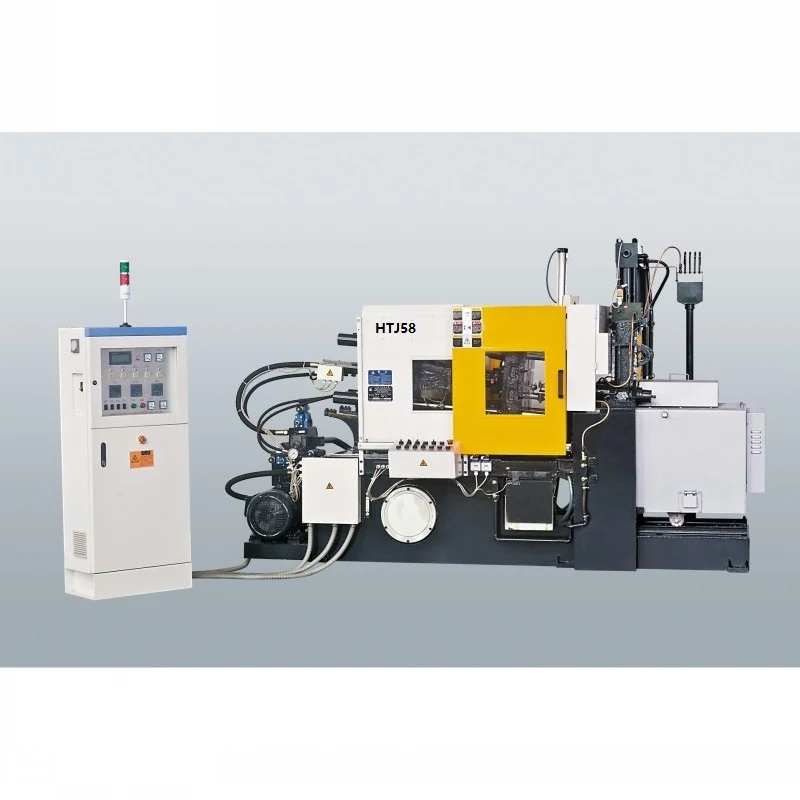
HTJ58 Die Casting Machine
The HTJ58 is a hot chamber die casting machine with a zinc alloy shot specification. Begin its selection with the zinc component and complete die assembly. Tool fit, injection demand and removal access need separate checks, followed by a layout review for the hot chamber production area.
Request an HTJ58 Quote ↗HTJ58 technical specifications
| Parameter | Unit | HTJ58 |
|---|---|---|
| Clamping Froce | kN | 580 |
| Moving Platen Stroke | mm | 210 |
| Space Between Tie Bar (HxV) | mm | 311x311 |
| Die Height (Min/Max) | mm | 120/320 |
| Injection Force | kN | 60 |
| Injection Stroke | mm | 130 |
| Injection Position | mm | 0,-50 |
| Ejecting Force | KN | 50 |
| Ejecting Stroke | mm | 60 |
| Dia meter of shot sleeve | mm | 50 |
| Max. Casting Projection Area | cm | 189 |
| Working pressure of vane pump | MPa | 11.5 |
| Motor Power | kW | 9.5 |
| Dosage of fluid metal per shot (Zn) | kg | 1.3 |
| Effective Volume of Crucible (Zn) | kg | 200 |
| Oil consuption of burner | kg/h | 1.5~6.0 |
| Oil Tank Capacity | L | 310 |
| Machine Weight | kg | 3500 |
| Machine Dimensions (LxWxH) | mm | 3600x1500x2000 |
01 / SERIES
Use the HTJ58 die window directly
The HTJ58 table gives 311x311 mm space between tie bars and a die height of 120/320 mm. Review these fields against the complete tooling assembly. The closed height includes the installed plates and any retained adapters, while the tie bar space concerns the route and envelope around the die. Draw the mounting arrangement, side features and connections rather than showing the cavity alone. The moving platen stroke is 210 mm. Consider what the open tool must expose, including the casting and its feed system. An assembly with projecting fittings or a deep part may need a more detailed access study than its closed dimensions suggest. If a tool already exists, attach its mounting drawing and explain the intended orientation in the machine.
02 / SERIES
Keep the zinc shot and crucible fields separate
HTJ58 dosage of fluid metal per shot is listed as 1.3 kg for zinc, while the effective crucible volume is listed as 200 kg for zinc. These describe different parts of the hot chamber arrangement. Crucible content is not the same thing as the quantity delivered to a tool in a shot. Estimate the complete metal requirement for the casting and its feed system, and state the zinc alloy designation. The injection force is 60 kN with a 130 mm injection stroke. The shot sleeve diameter is listed at 50 mm. Discuss these fields together with the gating concept and component geometry. Include ribs, recessed details and section changes in the drawing so the enquiry describes the filling requirement instead of relying only on net component weight.
03 / SERIES
Review release within the available opening
The HTJ58 ejection stroke is 60 mm, and ejecting force is listed at 50 KN. Show the casting at release and the direction in which it will leave the die. Include runners or gates that remain attached until a later trimming operation. The handling approach needs clearance for the gripping device as well as for the part itself. Tool fittings and any side actions should appear in their operating positions during this review. If extraction or spraying will be automated, describe those tasks and their sequence rather than assuming a general hot chamber accessory will fit. The arrangement of die faces, release position and discharge point gives a more useful basis for selecting peripherals. Identify any existing handling equipment you intend to keep and supply its interface information.
04 / SERIES
Plan the hot chamber area around actual interfaces
HTJ58 machine dimensions are 3600x1500x2000 mm, with a listed weight of 3500 kg. Use those dimensions in the floor plan without treating the machine outline as the entire operating area. Provide access for operators, maintenance and the casting discharge route. The motor power entry is 9.5 kW. Utility planning should also reflect separately selected auxiliaries and the intended production arrangement. Define what happens after ejection: collection, cooling, conveying or trimming may affect where equipment stands and how people approach the cell. For an HTJ58 enquiry, send the zinc alloy, part drawing, die assembly and full shot estimate with the project location. Clarify which connections and peripherals are already available. Keeping those details together supports a focused review of the machine against the actual tooling and handling task. Keep zinc feed information and the tooling revision together in the request. If the runner system changes, the metal required by the complete shot changes with it, so an updated tool drawing should be accompanied by the corresponding shot estimate.
PROJECT ENQUIRY
Discuss your
casting project
Send your alloy, part drawing details, mould dimensions and project location. Confirm order quantity and delivery requirements with your quotation request.
Prefer email?
info@yomato-machinery.com